
Loading...
Serving Muscatine, IA and surrounding areas. (563) 261-8903
Gaps, cracks, and penetrations let cold air in and heated air out all winter. We find them, seal them, and prove the results with a blower door test.
Gaps, cracks, and penetrations let cold air in and heated air out all winter. We find them, seal them, and prove the results with a blower door test.
Air sealing in Muscatine means closing every gap, crack, and penetration in your home's envelope where outside air sneaks in and conditioned air leaks out - most residential jobs are completed in one day, with before-and-after blower door testing included to confirm the results.
Adding insulation without sealing air leaks first is like putting a thick blanket over a window that is still cracked open - it helps, but not nearly as much as it should. In Muscatine, where the heating season runs six months and outdoor humidity near the Mississippi River adds a moisture challenge, air leaks work against you in every season. Homes built before 1980 - which make up a large share of Muscatine's housing stock - were built without any intentional air barrier, meaning gaps and penetrations were simply left open.
Air sealing and basement insulation work best together - rim joists are among the most common and most impactful leak locations in older Midwest homes, and addressing both in the same project delivers the strongest result.
Muscatine winters are genuinely cold, and a well-sealed home holds heat efficiently even when temperatures drop well below zero. If your gas or electric bill climbs dramatically during the coldest months - more than you would expect just from running the heat - conditioned air is escaping and cold air is replacing it faster than your furnace can keep up.
Hold your hand near an electrical outlet on an exterior wall on a cold winter day. If you feel cool air, that outlet connects to a gap that runs through to the outside. This is especially common in older Muscatine homes where wiring was added without sealing the penetrations back up.
Given Muscatine's position on the Mississippi River, outdoor humidity in summer is higher than in many other Iowa cities. If warm, moist air is finding its way into your basement through gaps, you may notice a musty smell, condensation on pipes, or persistent dampness that does not go away even with a dehumidifier running.
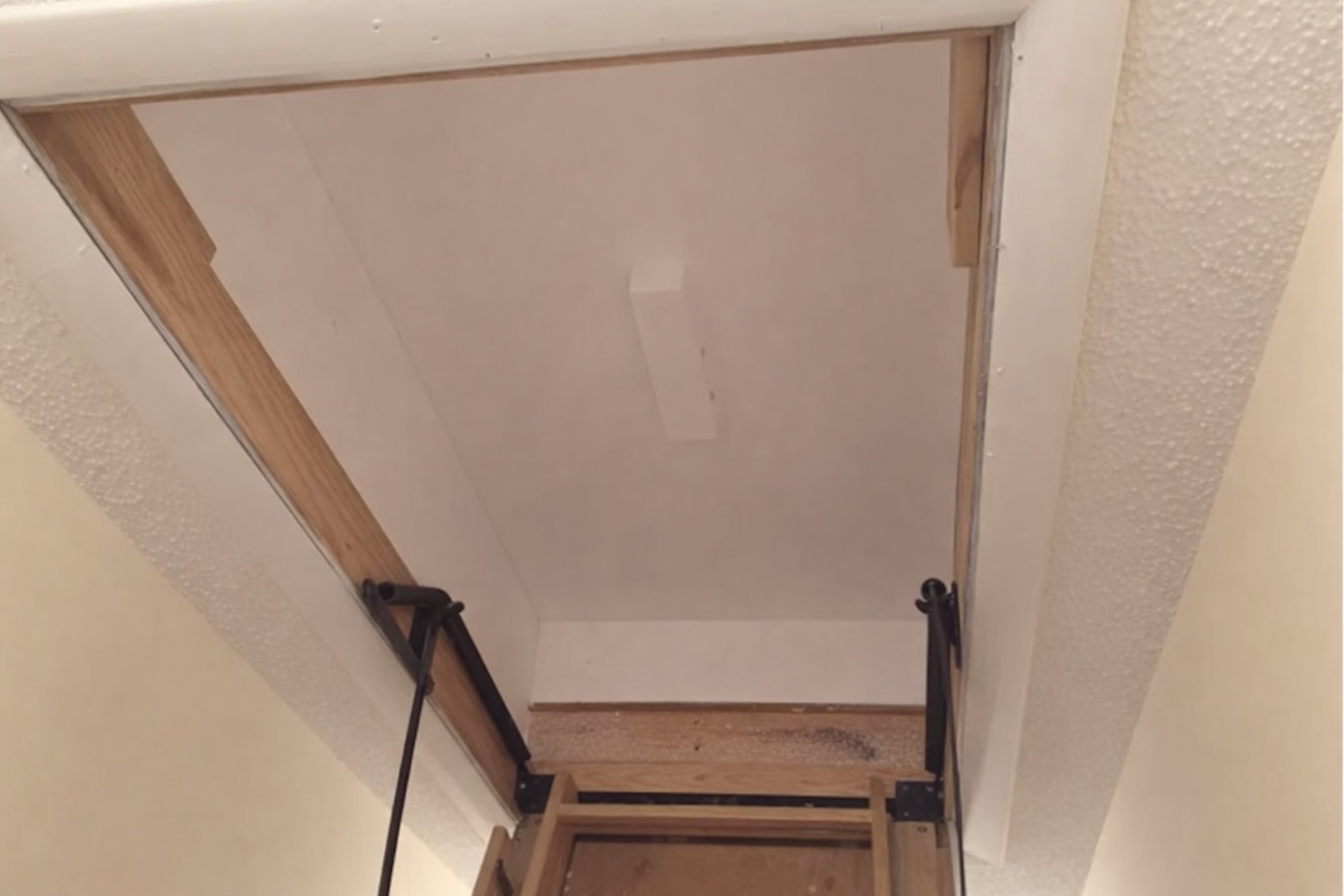
Open your attic hatch and look around the edges - if you can see light through gaps in the framing, outside air moves through those same gaps. Similarly, look at the framing in your basement where the floor meets the foundation wall. These rim joist gaps are among the most common and most impactful air leak locations in older Midwest homes.
Our process starts with a blower door test - a temporary fan mounted in your front door that depressurizes the house and forces air in through every gap. A technician then walks through with a smoke pencil or infrared camera to pinpoint exactly where leaks are entering. This diagnostic step is what separates a thorough job from a guess. Based on findings, the crew seals gaps using spray foam, caulk, or weatherstripping depending on the size and location of each opening. Most work is done in the attic and basement, where the biggest leaks are concentrated and easiest to access.
We also handle attic air sealing as a standalone service for homeowners whose primary concern is the attic floor - a common high-impact area in Muscatine's older homes. Pairing air sealing with basement insulation in the same visit typically delivers the most noticeable improvement in comfort and the strongest reduction in energy costs, since rim joists and basement penetrations are major contributors to air leakage in this climate.
Best for homeowners who want a comprehensive result - attic, basement, and all major penetrations addressed in one project.
Suited for homes where the attic floor is the primary source of heat loss and air infiltration.
Ideal for Muscatine homes with older basements where foundation-to-wall gaps are significant contributors to moisture and drafts.
Right fit for homeowners who want to know how leaky their home is before deciding whether to proceed with any work.
Muscatine sits in a climate where winter temperatures regularly drop well below zero and summer humidity - amplified by the Mississippi River - can be punishing. That combination means your home is fighting air infiltration in both directions: cold, dry air pushing in during January and warm, humid air pushing in during July. Air sealing pays off in every season here, not just winter. On top of that, a significant share of Muscatine's residential neighborhoods - particularly in older sections near downtown and along the river - feature homes built in the early to mid-20th century without any intentional air barrier. Homeowners in areas like Muscatine often do not realize how leaky their home is until a blower door test gives them the actual number.
Muscatine's position on the river also means that unsealed gaps do more than just waste energy - they let humid outdoor air into your walls, attic, and basement, where it can condense and quietly damage framing and insulation over years. Homeowners in nearby Bettendorf face similar river-corridor humidity challenges and older housing conditions, and we bring the same approach to every job. The U.S. Department of Energy recommends air sealing as a foundational weatherization step before adding any insulation.
Call or submit a request and we will ask about your home's age, approximate size, and what has been prompting your concern - high bills, drafts, or comfort issues. We reply within one business day and schedule your assessment.
A technician visits your home, runs a blower door test to measure how much air is leaking, and walks through the attic, basement, and living areas to find exactly where it is coming from. This takes one to two hours and you are welcome to follow along.
After the assessment, you receive a written estimate showing where the biggest leaks are, what the crew recommends sealing, the total cost, and whether you qualify for MidAmerican Energy or Alliant Energy rebates. No obligation to proceed on the same day.
The crew seals gaps in the attic and basement using foam, caulk, and weatherstripping. Most jobs are done in a single day. A second blower door test after the work confirms how much air leakage was reduced - so you have the proof in writing.
We reply within one business day, run a blower door test before and after the work, and walk you through every rebate you qualify for - no pressure, no obligation.
(563) 261-8903We measure your home's air leakage before the work starts and again after it finishes. You get an actual number showing how much was reduced - not just our word that the job was done right. This is the standard every serious air sealing contractor should meet.
We have worked in Muscatine since 2018 and understand the older housing stock, the Mississippi River humidity, and the specific leak patterns common in homes built in this area's early-to-mid 20th century neighborhoods.
MidAmerican Energy and Alliant Energy both offer rebates for qualifying air sealing work in the Muscatine area. We identify which programs apply to your project and provide the documentation you need to claim them - so you do not miss money you have already earned.
Our experienced crews handle every air sealing job start to finish, and we do not subcontract the work. We follow Building Performance Institute guidelines for every assessment and installation, and document the results with before-and-after blower door testing.
We do not skip the post-test or leave you without documentation. Every air sealing job we complete in Muscatine is backed by measurable results and the paperwork you need to claim rebates and credits. Building Performance Institute standards guide how we assess, seal, and verify every project.
Insulate basement walls and rim joists to stop cold transfer at the foundation level - pairs directly with air sealing for maximum impact.
Learn MoreTarget the attic floor specifically, where gaps around light fixtures, pipes, and framing are among the biggest sources of heat loss in older homes.
Learn MoreMuscatine winters arrive quickly, and the best time to seal your home is before the first cold snap. Call today or request a free estimate and we will get back to you within one business day.