
Loading...
Serving Muscatine, IA and surrounding areas. (563) 261-8903
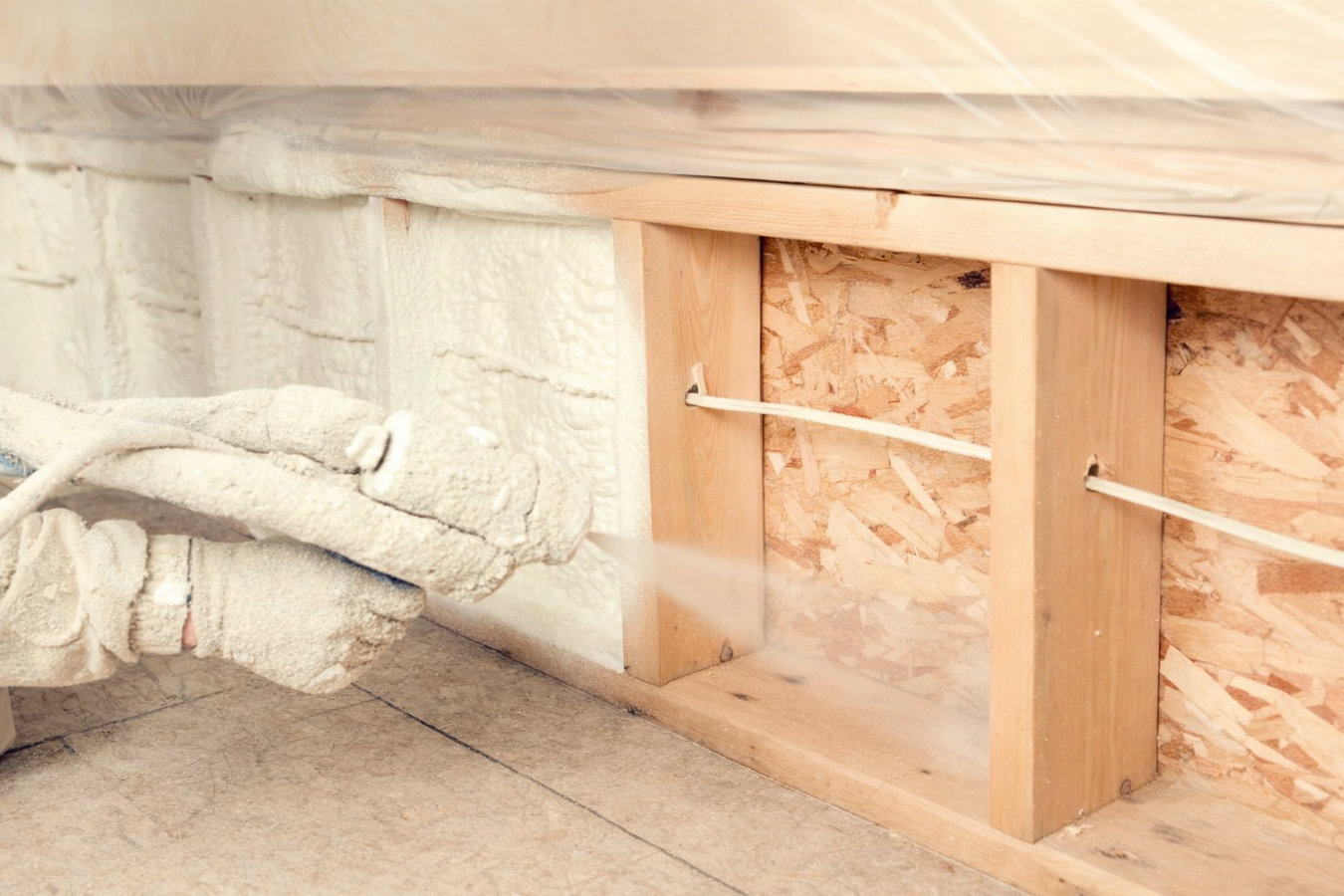
Closed-cell spray foam does two jobs at once - it insulates and seals air gaps in the same application. For Muscatine homes dealing with cold crawl spaces, drafty rim joists, and river-corridor humidity, it is the most effective solution available.
Closed-cell foam insulation in Muscatine bonds directly to walls, joists, and foundation framing as a rigid, dense layer that insulates and seals air gaps simultaneously - most residential jobs covering a crawl space or rim joist take one to two days from start to finish.
Unlike fiberglass batts, closed-cell foam does not sag, absorb moisture, or lose effectiveness over time in damp environments. That quality matters in Muscatine, where proximity to the Mississippi River means crawl spaces and basement walls see higher ground moisture than in drier parts of Iowa. Many homeowners who call us have already tried fiberglass and watched it fail within a few years. If your home also has significant air leakage in the attic, spray foam insulation applied to the roof deck is a natural companion project.
If your gas bill climbs sharply each November and stays high through March, your home is losing heat faster than it should. Muscatine winters are long and cold, and a home with gaps in the insulation or a leaky crawl space works your furnace much harder than necessary. This is one of the clearest signs your current insulation is not performing.
Walk through your home on a cold January day and pay attention to the floor near exterior walls - especially in rooms above a crawl space or unheated basement. If those areas feel noticeably colder than the center of the room, cold air is likely entering through foundation framing. This is extremely common in Muscatine's older homes and is exactly what closed-cell foam in the crawl space or rim joist fixes.
Fiberglass batts installed between floor joists in a crawl space are notorious for sagging over time, especially in Muscatine's humid environment near the river. If you can see the batts drooping or partially fallen, they have lost contact with the surface they are supposed to insulate and are providing almost no benefit. This is a very common finding in Muscatine homes built between the 1950s and 1990s.
Muscatine's proximity to the Mississippi River means ground moisture and humidity are real, ongoing factors. If you look into your crawl space and see wet insulation, condensation on pipes, or smell something musty, your current insulation is likely absorbing moisture and failing. Wet insulation does almost nothing to keep your home warm and can become a place where mold develops.
We apply closed-cell foam in the areas of Muscatine homes where it delivers the most value - crawl spaces, rim joists, basement walls, and in some cases the underside of roof decks in unconditioned attics. Each application starts with a site visit to assess existing conditions, measure the space, and identify any moisture issues that need to be addressed before foam goes in. We do not skip the assessment step because applying foam over a moisture problem creates a worse outcome than leaving the space bare.
For homeowners who want to compare options, open-cell foam insulation is available for interior walls and applications where moisture resistance is less critical. However, for the damp, below-grade, and foundation-adjacent areas that Muscatine homes typically need addressed first, closed-cell is the recommended choice because it holds its performance in conditions where open-cell and fiberglass degrade.
Best for Muscatine homes with unheated crawl spaces where sagging fiberglass or bare joist framing is letting cold air rise into the living areas.
Suits any Muscatine home where the band of framing just above the foundation is bare - the single most cost-effective closed-cell application in most older homes.
Ideal for basements where moisture resistance matters and a thin, high-performing layer needs to cover a large foundation wall area without adding bulk.
A good fit for homeowners who want to convert an unconditioned attic to conditioned space or who need to stop heat transfer through a low-pitch roof assembly.
Muscatine sits along the Mississippi River in a climate that delivers winter lows below zero and summer humidity that saturates crawl spaces and basements. That combination eliminates fiberglass batts as a practical long-term solution in any below-grade or foundation-adjacent space - they absorb moisture, lose R-value, and eventually sag and fail. Closed-cell foam resists water absorption, holds its insulating performance, and seals air gaps at the same time, which makes it the most suitable material for the areas of Muscatine homes that are hardest to protect. Homeowners in Muscatine and Bettendorf regularly call us after removing failed fiberglass that has been slowly degrading for years.
A significant share of Muscatine's housing stock predates modern insulation standards, and many of these homes have rim joists and crawl spaces that have never been addressed. The potential comfort and energy improvements from a targeted closed-cell foam application in these areas are often larger than any other single home improvement project. Most Muscatine homes are heated by natural gas through MidAmerican Energy, and reducing how hard the furnace works each winter shows up directly on monthly bills - the payback period for well-targeted foam work is typically shorter than homeowners expect. The U.S. Department of Energy recommends air sealing and insulation together as one of the most impactful home energy improvements available.
Reach out by phone or the contact form. We respond within one business day, ask a few basic questions about the area you want insulated, and schedule an in-home visit at your convenience.
We walk the crawl space, rim joist, or other areas you want addressed - checking for moisture, measuring the space, and assessing existing conditions. You receive a written estimate that covers scope, materials, and cost before any work is scheduled.
We confirm whether a building permit is required through the City of Muscatine and handle the application if so. Before installation day, you clear the work area of stored items so the crew has clean access.
The crew arrives with spray equipment and applies the foam in the agreed areas. Work moves quickly once it starts - the foam hardens within seconds. Your contractor will give you a specific re-entry time for the work area, typically a few hours after spraying is complete.
We respond within one business day and provide written estimates with no obligation.
(563) 261-8903Spray foam is a specialized skill - not every insulation company applies it regularly or correctly. We have applied closed-cell foam in crawl spaces, basements, and rim joists throughout Muscatine and the surrounding area. The Spray Polyurethane Foam Alliance provides training and installation standards for the industry, and we apply foam in accordance with those standards.
We check every crawl space and basement for water intrusion and moisture issues before recommending foam. In Muscatine's river-corridor environment, skipping this step leads to foam that traps dampness and creates mold conditions. Our assessment process protects your home and ensures the installation performs as expected.
We have worked on closed-cell foam projects throughout Muscatine since 2018 and understand the specific moisture, temperature, and housing conditions in this area. That local experience means our recommendations are grounded in what actually works in a Muscatine crawl space - not in a generic product brochure.
Our experienced crews handle every closed-cell foam job directly, and we do not subcontract the work. We coordinate permits when a project requires them, document what was done, and walk you through the finished job so you know exactly what you paid for.
When you hire us for closed-cell foam work in Muscatine, you get a contractor who knows the local moisture conditions, handles permit requirements correctly, and walks you through the finished work before leaving. We do not cut corners on assessment or application because thin foam does not deliver the comfort improvement you are paying for.
A softer, lower-cost foam option suited to interior walls and attic applications where moisture resistance is less of a priority.
Learn MoreFull spray foam services covering attics, walls, and roof decks - the broader category that closed-cell foam falls under.
Learn MoreMuscatine winters wait for no one - lock in your installation date now and stop losing heat through your crawl space and rim joist this season.