
Loading...
Serving Muscatine, IA and surrounding areas. (563) 261-8903
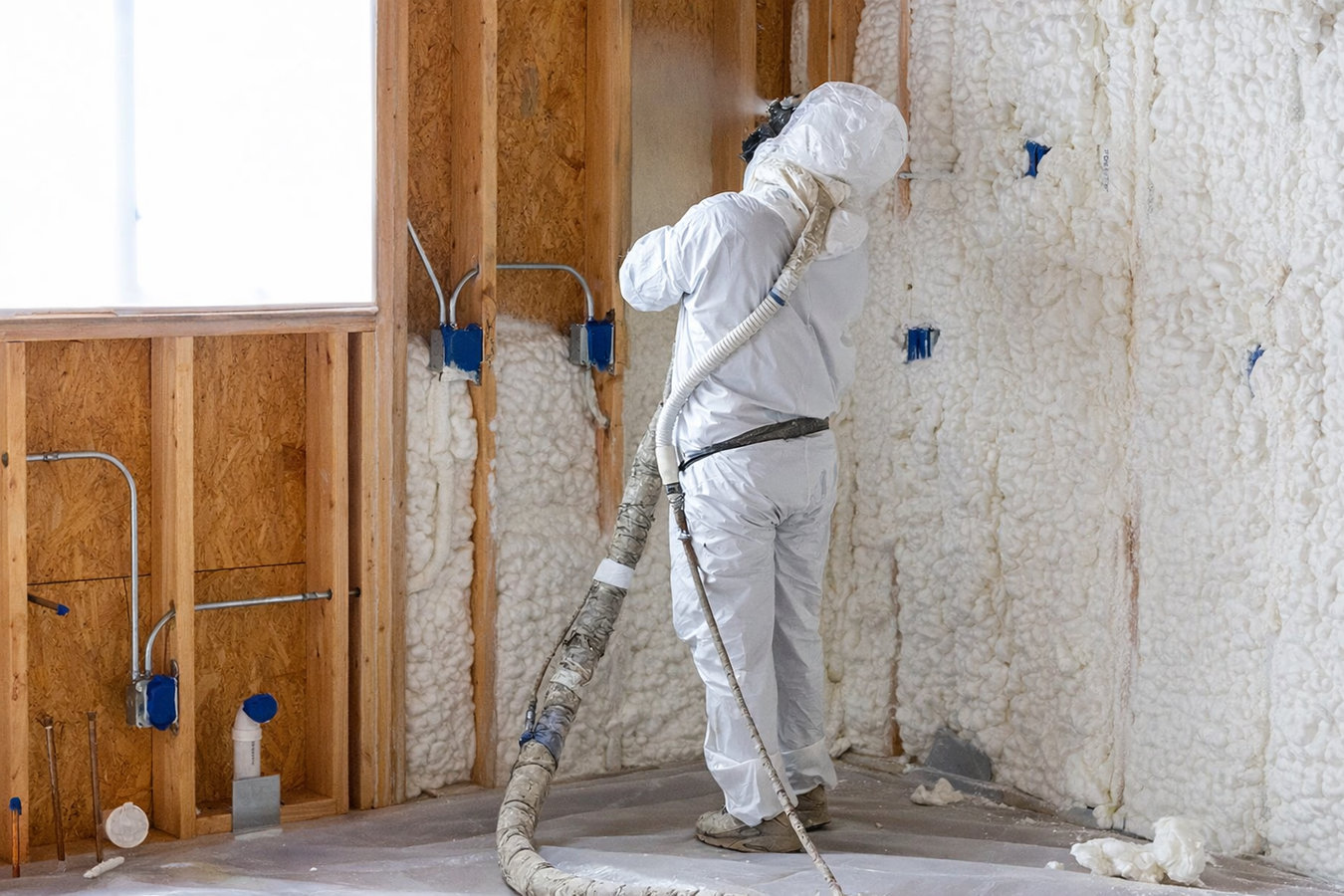
Muscatine Insulation is an insulation contractor serving Moline, IL with spray foam insulation, attic insulation, and basement insulation for homeowners throughout the Quad Cities area. We have been working in the region since 2018 and know what Moline homes are made of - from early 1900s Craftsman bungalows and American Foursquares in the central neighborhoods to mid-century ranch homes on the south side and hilltop properties with views of the Mississippi River.
Moline's pre-1960 homes - bungalows, Foursquares, and early ranch houses - were built without rim joist insulation and with wall cavities that were never filled. Spray foam expands into the irregular gaps in original framing and sets as both insulation and an air barrier, addressing the two biggest sources of heat loss in these older properties in a single application. Read more about materials, process, and pricing on our spray foam insulation page.
Moline averages 25 to 30 inches of snow each winter, and homes with thin attic coverage lose heat through the roof fast - which means ice dams along eaves and higher heating bills month after month. Craftsman bungalows with their lower-pitched roofs are especially prone to having inadequate attic depth for proper insulation, and adding coverage in these homes requires experience with the specific framing style.
Full basements are the norm in Moline's older homes, and those foundation walls sit in clay-heavy glacial soil that holds water and shifts with every wet spring and dry summer. Insulating basement walls and rim joists in these homes does double duty - cutting heat loss at the bottom of the house while also addressing the moisture pressure that leads to damp walls and musty basements over time.
Many of Moline's wood-frame homes from the early and mid-1900s have wall cavities with no insulation at all, or with original insulation that has settled and degraded. Blown-in dense-pack insulation can be added to these cavities through small drilled holes without removing siding or interior plaster, which is the right approach for any Moline homeowner who wants better performance without a full renovation.
In Moline's oldest homes, air leakage - not just insulation depth - is the primary source of comfort problems and high energy bills. Gaps around old plumbing penetrations, unblocked wall cavities, and original attic bypasses let conditioned air out and cold air in all winter long. Air sealing these pathways at the attic floor and in the basement delivers measurable results before any additional insulation is added.
With a median home build year around 1955, Moline has one of the oldest housing stocks in the Quad Cities, and a significant share of those homes have never had a proper insulation upgrade. Retrofit insulation brings these properties closer to current standards without tearing into original woodwork, plaster, or brick - targeted work in the attic, rim joists, and accessible wall cavities delivers the biggest return for the investment.
Moline sits on a bluff above the Mississippi River in Rock Island County, and the climate here demands a lot from home insulation. Winters average 25 to 30 inches of snow, with temperatures that regularly drop below 10 degrees Fahrenheit and frost that can penetrate the ground 30 to 40 inches deep. Freeze-thaw cycles from January through March put sustained stress on foundations, concrete, and masonry - a particular issue for Moline's many brick-exterior homes and for the clay-heavy glacial soil that underlies most of the city. That soil expands when wet and shrinks when dry, shifting foundations and basement walls over time and creating conditions for chronic moisture intrusion in lower-level spaces. Hot, humid summers with severe thunderstorms from May through September add another layer of demand on the building envelope, accelerating wood rot and paint failure on older exteriors and creating a surge of damage repair work after hail and wind events.
What makes Moline distinct from many Midwest cities is the age of its housing stock. The median year built for homes in Moline is around 1955, and a substantial share of the housing dates to before World War II. Craftsman bungalows and American Foursquare two-stories are the dominant styles in the central and near-north neighborhoods - handsome houses that were built without rim joist insulation, with uninsulated wall cavities, and with attic framing that predates modern energy standards by 60 to 80 years. Long-term homeowners who have lived in the same house for decades often have a backlog of deferred maintenance, and insulation is one of the first upgrades that pays for itself through lower utility bills. A contractor who has worked in these homes before knows where to look, what materials fit the framing, and how to upgrade performance without disturbing original woodwork or plaster walls.
Our crew works throughout Moline and the broader Quad Cities area regularly, and we understand the local conditions that affect insulation work here. One thing that sets Moline apart is how much the work changes depending on where in the city a home sits. On the South Hill and in the Overlook neighborhood, homes tend to be larger brick or wood-frame two-stories - well-built original structures that need targeted improvements to wall cavities and rim joists rather than wholesale replacement. In the older neighborhoods closer to the downtown core, smaller bungalows and two-flats are more common, and the insulation challenges in those tighter, narrower properties are different. Ranch homes on the south and west sides of Moline, built in the 1950s and 1960s, present a third type: lower-pitched roofs with attic space that can be difficult to access and original ductwork that often runs through unconditioned space.
Moline is the home of John Deere, whose global headquarters and the John Deere Pavilion are recognizable landmarks in the city. Riverside Drive runs along the Mississippi River through the lower part of the city, and Interstate 74 connects Moline to the Iowa side of the Quad Cities via the I-74 bridge. The city is tightly connected to its neighbors: Rock Island to the west and East Moline to the east are the closest communities on the Illinois side, and Bettendorf and Davenport are just across the river in Iowa. We serve all of these communities and frequently work across multiple Quad Cities addresses in a single week.
We serve the neighboring East Moline area regularly, where the housing stock shares many of the same characteristics as Moline's older neighborhoods. If you have properties in both cities or are coordinating work across multiple Quad Cities locations, we handle all of it together.
Reach us by phone or through the online contact form. We respond within one business day to confirm a visit time. No deposit is required to schedule, and there is no obligation to proceed after the estimate.
We walk the home with you and check the attic, basement, and any problem areas. For older Moline homes, we pay close attention to rim joists, wall cavity condition, and signs of moisture - the issues that matter most in pre-1960 construction. You get a written estimate before we leave.
Most Moline jobs are completed in a single day. We protect the work area, clean up before leaving, and do not leave the job half-finished. For spray foam applications, we provide a written re-entry time - typically 24 hours - before work begins so you can make arrangements.
We walk through the completed work with you before leaving and explain what was done and what to expect going forward. If anything is not right after we leave, call us and we will come back.
No pressure, no obligation. We assess your Moline home and give you a written estimate before any work starts.
(563) 261-8903Moline is a city of roughly 41,000 to 43,000 people in Rock Island County, Illinois, on the Mississippi River across from Davenport and Bettendorf, Iowa. It is one of the four main cities in the Quad Cities metro area and is best known as the global headquarters of John Deere, which has been based here since the 1840s. Moline sits on a bluff above the river, and the city rises steeply from the riverfront to higher ground - a topography that creates distinct neighborhoods at different elevations. The older neighborhoods closest to downtown and near the original industrial core along the river hold much of the city's pre-war housing stock: Craftsman bungalows, American Foursquare two-stories, and small two-flats built when Moline was growing fast on manufacturing jobs. The South Hill and Overlook neighborhoods sit on higher ground and feature larger homes - many of them brick - that were built for Moline's middle and professional class in the early to mid-1900s. You can learn more about the city's history at the Moline, Illinois Wikipedia page.
Ranch-style homes from the 1950s and 1960s fill the newer residential sections on the south and west sides of the city, built when Moline was expanding outward from the original core. Homeownership rates in Moline are relatively high for a Midwest city of its size, and many owners have lived in the same house for years - which means a lot of homes with solid bones that simply need the energy efficiency work that was never done when they were built. We also serve Rock Island, just to the west of Moline, where the housing stock is similarly aged and the insulation needs are comparable. Whether your home is near the John Deere Pavilion along the riverfront or out on one of the quieter streets on the south side, we serve all of Moline.
Seal gaps and boost energy efficiency with professional spray foam application.
Learn MoreWarm basements and lower energy costs with expert insulation installation.
Learn MoreHigh-density closed-cell foam delivers superior moisture and thermal resistance.
Learn MoreFlexible open-cell foam provides excellent soundproofing and air sealing.
Learn MoreEnergy-efficient insulation solutions for commercial and industrial buildings.
Learn MoreBlock moisture intrusion and protect your home's structural integrity.
Learn MoreProfessional vapor barrier installation keeps moisture out of your home.
Learn MoreUpgrade existing insulation without major renovation or demolition work.
Learn MoreCall us today or submit a free estimate request. We serve all of Moline and the Quad Cities area and respond within one business day.